
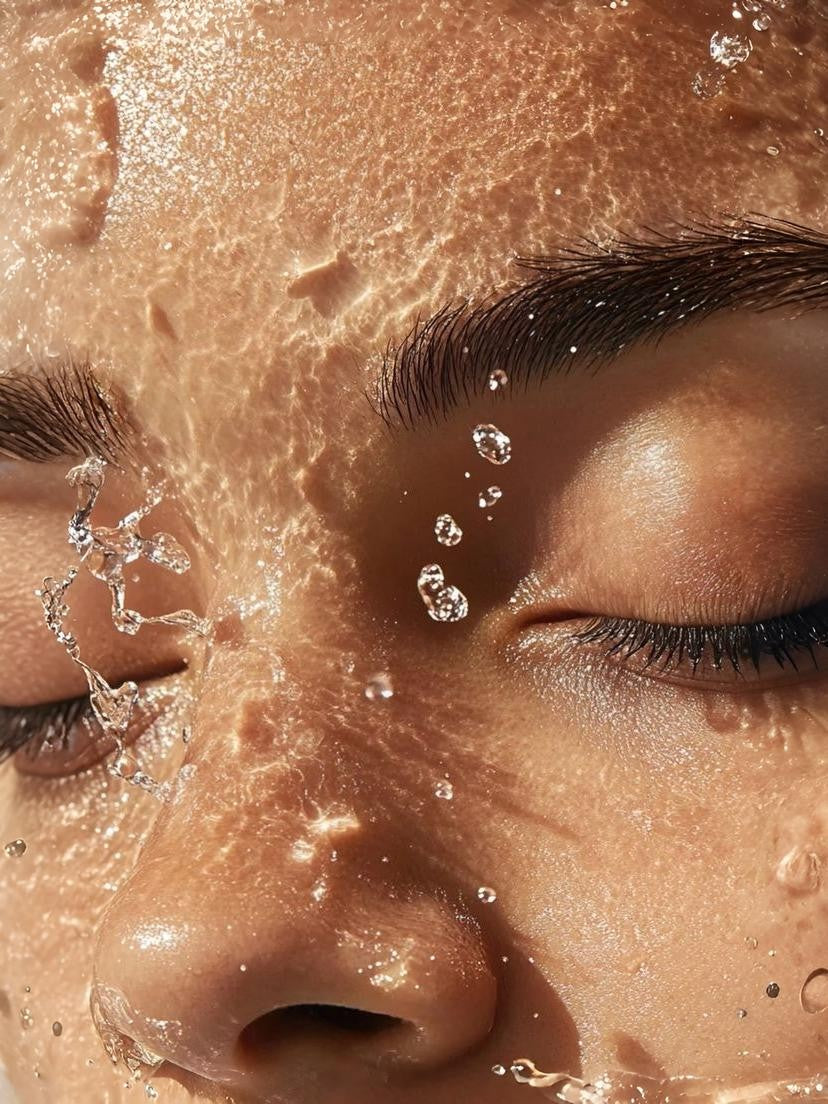
Deep Hydration: Why Surface Moisturizing Is Not Enough
Introduction
You have probably used moisturizing creams your entire life. And yet your skin still feels tight, dry, and lacks radiance. This paradox is more common than you might think. The reason is often that the hydration you provide stays on the surface, far from the layers where true moisture balance is determined.
Skin Structure and Water
The skin is made up of three main layers: the epidermis on the surface, the dermis in the middle, and the hypodermis beneath. The water that keeps skin supple and luminous is not found only in the superficial layers. It is distributed throughout all these layers, and its presence in the dermis is what truly determines how the skin looks at the surface.
When a cream hydrates only the epidermis, it temporarily relieves the feeling of dryness but does not address the root cause. As soon as the effect fades, the skin returns to its previous state.
The Difference Between Humectants, Emollients, and Occlusives
Moisturizing products work through three distinct mechanisms. Humectants such as hyaluronic acid or glycerin capture moisture from the air and retain it in the superficial skin layers. Emollients such as plant oils and avocado butter nourish and soften the intermediate layers. Occlusives such as petroleum jelly create a protective film on the surface to prevent water evaporation.
Truly effective hydration combines all three types of ingredients to act at every level of the skin. A product that contains only one type of active ingredient cannot provide complete and lasting hydration.
The Role of the Skin Barrier
The skin barrier is the guardian of your skin's hydration. When it is intact, it retains moisture inside and prevents external irritants from penetrating. When it is weakened by unsuitable products, overly aggressive cleansers, or harsh environmental conditions, water escapes constantly and no hydration truly lasts.
Strengthening the skin barrier is therefore a prerequisite for any serious hydration approach. Ceramides, essential fatty acids, and oils rich in omega-6 and omega-9 are the most effective ingredients for this rebuilding work.
How to Know If Your Skin Is Truly Deeply Hydrated
Skin that is genuinely hydrated in depth shows several signs. It springs back slightly when gently pinched rather than forming small folds. It does not feel tight in the half-hour following cleansing. It has a smooth, even surface without dry patches or oily zones. Its complexion is even and luminous even without makeup.
If you experience chronic tightness, dry patches, an uneven skin texture, or persistently dull radiance, it is a sign that your hydration is insufficient or not penetrating deeply enough.
Conclusion
Deep hydration is not a luxury. It is the foundation of healthy skin at any age. By choosing formulas that combine the right active ingredients and by taking care of your skin barrier, you give your skin the foundation it needs to stay supple, radiant, and resilient over time.
En lire plus
IntroductionYou have been using skincare products for years. You follow recommendations, read labels, and buy well-reviewed products. Yet your skin does not really improve, or it has even gotten wo...

IntroductionThe word collagen is everywhere. On packaging, in advertisements, in everyday conversations. But behind this term lie very different realities depending on the source and the form used....